Leon Underwood
1890 - 1975
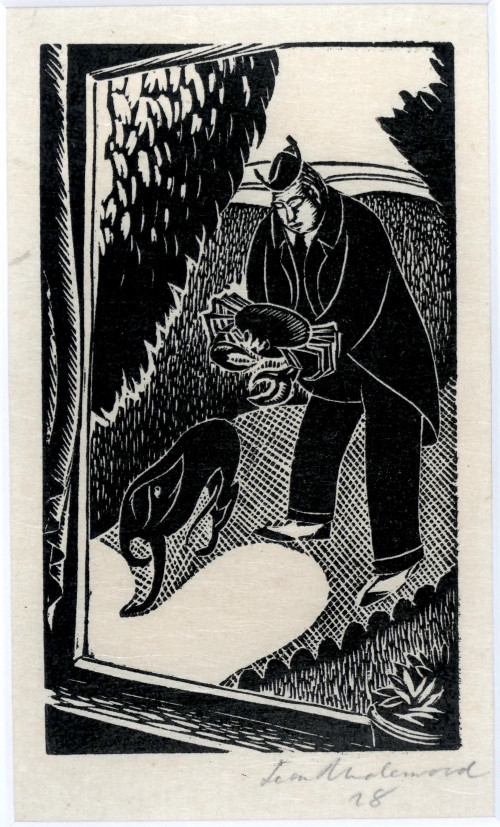
In relation to his great talent and artistic output, Underwood is widely recognised as, conversely, one of the most under-appreciated 20th-century British artists. It is his remarkable versatility, achieving greatness in several spheres, from WW1 painting to wood engraving and sculpture, that makes Leon Underwood difficult to pigeonhole and categorise within recognised artist movements. After studying at the Regent Street Polytechnic and while at the Royal College of Art, Underwood was commissioned to paint a mural at the Peace Palace in The Hague. Enlisting in the Royal Horse Artillery, he worked in camouflage and made detailed drawings of trees to be replaced with metal observation posts, and painted some of the iconic paintings of WW1. Underwood returned to the Slade after the War, winning the Prix de Rome, afterwards establishing the Brook Green art school, where he made woodcuts and sculpture.. In 1926, he travelled to the United States, setting up a life drawing school in Greenwich Village and publishing illustrated books in New York.. Back in England after 1928, he worked at Brook Green teaching Henry Moore, Blair Hughes-Stanton, Eileen Agar and Gertrude Hermes. After again working in camouflage in World War 2 he undertook pioneering study and collecting of African art, which influenced the development of his own sculpture. After a retrospective exhibition in 1969, it was not until 2015 that Pallant House Gallery staged a long overdue survey exhibition of his work.
2 ITEMS